
Popular Topic
- Cell Theory Notes - Definition, Parts, History, & Examples
- Difference between Prokaryotic and Eukaryotic Cells
Living Organism
Team is working on this chapter. Loading soon.

Cell Structure & Function
Team is working on this chapter. Loading soon.
Plant Physiology
Team is working on this chapter. Loading soon.
Human Physiology
Team is working on this chapter. Loading soon.
Reproduction
Team is working on this chapter. Loading soon.
Genetics & Evolution
Team is working on this chapter. Loading soon.
Ecology & Environment
Team is working on this chapter. Loading soon.
Biology
The term “biology” is derived from the Greek terms bios (meaning “life”) and logos (meaning “study” or “discourse”). It is the study of living organisms and the essential processes that support their existence.
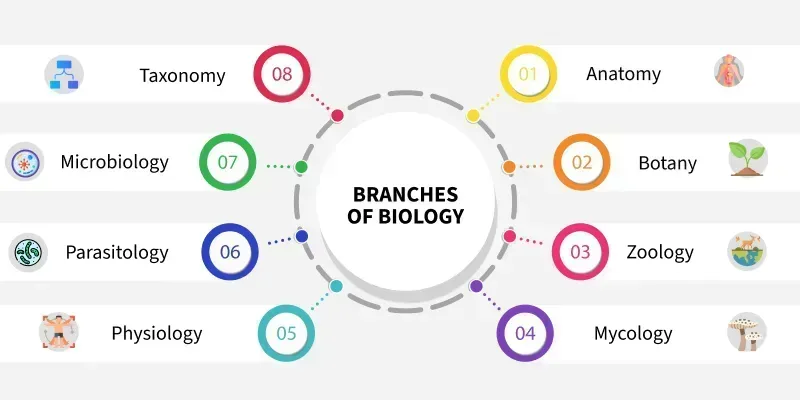
Biology is divided into three main branches such as botany (plants), zoology (animals), and microbiology (microorganisms).
It explores the chemical and physical forces shaping life, from molecules to ecosystems, focusing on all the physicochemical aspects of life.
Why Should We Learn Biology?
Biology is the study of ALL LIFE – and as a living being, you’re already part of it. Whether you’re curious about how your body works or how other organisms survive, biology provides the answers. It’s the key to truly understanding the world around us.
- Immune System: Why people fall sick and how your body fights back.
- Photosynthesis: Why leaves are green and how plants create oxygen/food.
- Digestion: Why we feel hungry and how your body turns food into energy.
- Circadian Rhythm: Why we need sleep and how light controls your internal clock.
- Cell Regeneration: How cuts heal through your body’s self-repair system.
Biology Fundamentals
Let’s start with the fundamentals of biology, where you get the basic knowledge of life, its characteristics, and the key principles that shape living organisms and their interactions with each other and the environment.
- Biological Nomenclature
- Biological Classification
- Real-Life Applications of Biology
Exploring Life
This field focuses on the extensive variety of life forms on Earth, classified into different kingdoms such as Monera, Protista, Fungi, Plantae, and Animalia. It explores the unique characteristics of each group, highlighting their differences in structure, function, and behavior.
- Classification of Organisms
- Protists as Decomposers
- Viruses
- Microorganisms
- Symbiosis
- What is Homeostasis?
Cell
It is about the structure and function of prokaryotic and eukaryotic cells. Key organelles, including the nucleus, mitochondria, and ribosomes, play essential roles in processes like protein synthesis, energy production, and cell division.
- Cell Theory
- Cell Organelles
- Cell Division
- Cell Cycle
- Archaea vs Bacteria
- Virus vs Bacteria
- The Role of Prokaryotes in Ecosystems
Plant Physiology
Plant physiology focuses on the functions and processes that occur in plants, including photosynthesis, respiration, and nutrient transport. It explores how plants convert light energy into chemical energy and use water and minerals for growth.
- Photosynthesis
- Nutrition in Plants
- What are Metabolites?
- Excretion in Plants
- Transpiration
- Transportation in Plants
- Plant Growth and Development
- Plant Sensory Systems and Responses
- Plant Hormones
Plants and Animals
This topic explores how living organisms are organized, from cells to tissues, organs, and systems, in both plants and animals. In plants, tissues support growth, structure, and transport of nutrients, while in animals, specialized tissues form organ systems that carry out vital functions such as movement, circulation, and digestion.
Plant Anatomy
Human Anatomy
Structure and Types of Animal Tissues
Morphology
Plant Morphology
Animal Morphology
Human Physiology
Human physiology studies the functions of the body’s systems, such as the digestive, respiratory, circulatory, and nervous systems. It examines how organs and tissues work together to maintain homeostasis and support overall health.
Human Digestive System
Human Respiratory System
Human Circulatory System
Human Excretory System
Human Nervous System
Exocrine System
Endocrine System
Difference between Endocrine and Exocrine Glands
Muscular System
Skeletal Systems
Integumentary System
Reproduction
Reproduction is the biological process by which organisms produce offspring, ensuring the continuation of the species. It can be asexual, involving a single parent and producing genetically identical offspring, or sexual, requiring two parents and resulting in genetic variation.
- Asexual and Sexual Reproduction
- Plant Reproduction
- Modes of Reproduction in Plants
- Difference between Angiosperms versus Gymnosperms
- Human Reproductive System
- Reproductive Phase of Life in Humans
- Reproductive Health
Genetics and Evolution
Genetics focuses on the inheritance of traits through genes, with principles like Mendel’s laws regulating dominant and recessive alleles. Evolution describes how genetic variations lead to species adaptation over time through natural selection.
- Gregor Mendel and the Principle of Inheritance
- Mendel’s Law of Inheritance
- Chromosomal Theory of Inheritance
- Molecular Genetics
- Gene Expression and Regulation
- Evolutionary Biology
- Modern Synthetic Theory of Evolution
Health and Diseases
Human health focuses on the proper functioning of the body and its systems, whereas diseases are conditions that disrupt this balance. Diseases can be communicable (caused by infections) or non-communicable (due to lifestyle, genetics, or environmental factors).
- Human Health and Diseases
- Common Diseases in Humans
- Immunity and its types
- Antibody
- Antigens
- How does an Antibody Destroy Pathogens?
- Difference Between Antigen and Antibody
- What is ELISA?
Ecology and Environment
Ecology explores the relationships between living things and their surroundings, from the flow of energy in ecosystems to the dynamics of populations and communities. Alongside these principles, environmental issues such as pollution, climate change, and deforestation are studied to understand their effects on biodiversity and the balance of natural systems.
- Ecosystem
- Population Ecology
- Community Ecology
- Weather and Climate
- Environmental Issues and Solutions
- Biodiversity
- Biogeochemical Cycles
- Difference between Environment and Ecology
Biotechnology
Biotechnology involves the use of living organisms or biological systems to create products and technologies for various fields. It includes genetic engineering, where DNA is modified for medical, agricultural, and industrial purposes.
- Genetic Engineering
- DNA
- How is Biotechnology used in our Daily Life?
- Biotechnology and Its Principles
- What is the Process of Biotechnology?
- Biotechnology and Its Applications
- Central Dogma of Molecular Biology
- Gene Therapy
Biology
The term “biology” is derived from the Greek terms bios (meaning “life”) and logos (meaning “study” or “discourse”). It is the study of living organisms and the essential processes that support their existence.
Biology is divided into three main branches such as botany (plants), zoology (animals), and microbiology (microorganisms).
It explores the chemical and physical forces shaping life, from molecules to ecosystems, focusing on all the physicochemical aspects of life.
Why Should We Learn Biology?
Biology is the study of ALL LIFE – and as a living being, you’re already part of it. Whether you’re curious about how your body works or how other organisms survive, biology provides the answers. It’s the key to truly understanding the world around us.
- Immune System: Why people fall sick and how your body fights back.
- Photosynthesis: Why leaves are green and how plants create oxygen/food.
- Digestion: Why we feel hungry and how your body turns food into energy.
- Circadian Rhythm: Why we need sleep and how light controls your internal clock.
- Cell Regeneration: How cuts heal through your body’s self-repair system.
Biology Fundamentals
Let’s start with the fundamentals of biology, where you get the basic knowledge of life, its characteristics, and the key principles that shape living organisms and their interactions with each other and the environment.
- Biological Nomenclature
- Biological Classification
- Real-Life Applications of Biology
Exploring Life
This field focuses on the extensive variety of life forms on Earth, classified into different kingdoms such as Monera, Protista, Fungi, Plantae, and Animalia. It explores the unique characteristics of each group, highlighting their differences in structure, function, and behavior.
- Classification of Organisms
- Protists as Decomposers
- Viruses
- Microorganisms
- Symbiosis
- What is Homeostasis?
Cell
It is about the structure and function of prokaryotic and eukaryotic cells. Key organelles, including the nucleus, mitochondria, and ribosomes, play essential roles in processes like protein synthesis, energy production, and cell division.
- Cell Theory
- Cell Organelles
- Cell Division
- Cell Cycle
- Archaea vs Bacteria
- Virus vs Bacteria
- The Role of Prokaryotes in Ecosystems
Plant Physiology
Plant physiology focuses on the functions and processes that occur in plants, including photosynthesis, respiration, and nutrient transport. It explores how plants convert light energy into chemical energy and use water and minerals for growth.
- Photosynthesis
- Nutrition in Plants
- What are Metabolites?
- Excretion in Plants
- Transpiration
- Transportation in Plants
- Plant Growth and Development
- Plant Sensory Systems and Responses
- Plant Hormones
Plants and Animals
This topic explores how living organisms are organized, from cells to tissues, organs, and systems, in both plants and animals. In plants, tissues support growth, structure, and transport of nutrients, while in animals, specialized tissues form organ systems that carry out vital functions such as movement, circulation, and digestion.
Plant Anatomy
Human Anatomy
Structure and Types of Animal Tissues
Morphology
Plant Morphology
Animal Morphology
Human Physiology
Human physiology studies the functions of the body’s systems, such as the digestive, respiratory, circulatory, and nervous systems. It examines how organs and tissues work together to maintain homeostasis and support overall health.
Human Digestive System
Human Respiratory System
Human Circulatory System
Human Excretory System
Human Nervous System
Exocrine System
Endocrine System
Difference between Endocrine and Exocrine Glands
Muscular System
Skeletal Systems
Integumentary System
Reproduction
Reproduction is the biological process by which organisms produce offspring, ensuring the continuation of the species. It can be asexual, involving a single parent and producing genetically identical offspring, or sexual, requiring two parents and resulting in genetic variation.
- Asexual and Sexual Reproduction
- Plant Reproduction
- Modes of Reproduction in Plants
- Difference between Angiosperms versus Gymnosperms
- Human Reproductive System
- Reproductive Phase of Life in Humans
- Reproductive Health
Genetics and Evolution
Genetics focuses on the inheritance of traits through genes, with principles like Mendel’s laws regulating dominant and recessive alleles. Evolution describes how genetic variations lead to species adaptation over time through natural selection.
- Gregor Mendel and the Principle of Inheritance
- Mendel’s Law of Inheritance
- Chromosomal Theory of Inheritance
- Molecular Genetics
- Gene Expression and Regulation
- Evolutionary Biology
- Modern Synthetic Theory of Evolution
Health and Diseases
Human health focuses on the proper functioning of the body and its systems, whereas diseases are conditions that disrupt this balance. Diseases can be communicable (caused by infections) or non-communicable (due to lifestyle, genetics, or environmental factors).
- Human Health and Diseases
- Common Diseases in Humans
- Immunity and its types
- Antibody
- Antigens
- How does an Antibody Destroy Pathogens?
- Difference Between Antigen and Antibody
- What is ELISA?
Ecology and Environment
Ecology explores the relationships between living things and their surroundings, from the flow of energy in ecosystems to the dynamics of populations and communities. Alongside these principles, environmental issues such as pollution, climate change, and deforestation are studied to understand their effects on biodiversity and the balance of natural systems.
- Ecosystem
- Population Ecology
- Community Ecology
- Weather and Climate
- Environmental Issues and Solutions
- Biodiversity
- Biogeochemical Cycles
- Difference between Environment and Ecology
Biotechnology
Biotechnology involves the use of living organisms or biological systems to create products and technologies for various fields. It includes genetic engineering, where DNA is modified for medical, agricultural, and industrial purposes.
- Genetic Engineering
- DNA
- How is Biotechnology used in our Daily Life?
- Biotechnology and Its Principles
- What is the Process of Biotechnology?
- Biotechnology and Its Applications
- Central Dogma of Molecular Biology
- Gene Therapy